Trafficking in bear gall bladders draws fines and jail sentence

WDFW NEWS RELEASE
Washington Department of Fish and Wildlife

OLYMPIA – Investigations by Washington Department of Fish and Wildlife (WDFW) detectives into illegal trafficking in bear gall bladders have resulted in hefty fines for two eastern Washington men and a year-long jail sentence for one of them.

William A. Page, 63, a Curlew meat cutter, was sentenced Dec. 18 in Ferry County Superior Court to a year in jail plus $3,000 in fines after being convicted a month earlier of six counts of unlawful trafficking in wildlife.

Page, of 49 Bjork Ranch Rd. in Curlew, also forfeited $1,600 he paid to undercover WDFW officers for the gall bladders.

Mike Cenci, WDFW deputy chief of enforcement, said Page admitted to buying 35 gall bladders in 2007 and 2008, including 17 he purchased from undercover officers during the course of the department’s investigation.

Some people believe bear gall bladders have healing powers, Cenci said. He noted that black market prices for galls can range between $100 to thousands of dollars, depending on whether the sales take place locally or overseas.

“Buying or selling bear gall bladders is a crime in this state, because it creates an increased demand for wildlife and their body parts,” Cenci said. “That can threaten the long-term sustainability of populations that can’t withstand commercialization.”

In a separate case, the Spokane County Superior Court fined the owner of a Spokane food market $1,000 on Dec. 22 for two felony convictions of illegally trafficking in wildlife.

A Spokane jury found Jason Yon, 51, owner of JAX Market on East Mission Street, guilty of purchasing four bear gall bladders from WDFW officers during an undercover investigation in 2008. In addition to the fine, Yon forfeited $800 he paid to buy the gall bladders.

Cenci said WDFW relies heavily on tips from hunters and people in local communities about illegal wildlife-trafficking operations. He asks that people who believe they have witnessed these crimes call WDFW Enforcement at (360) 902-2936.

Human-Wildlife Conflict Training

HWCC_wendyIt seems like more and more we are hearing about and dealing with human-wildlife conflicts which in many cases are more about conflicts between humans than about wildlife. As part of my job with the Grizzly Bear Outreach Project (GBOP) and my job as a zoo keeper this topic comes up a lot. Dealing with this topic can be touchy so I was very excited to hear about a course that teaches about conflict dynamics and how to address them.

I attended the Conservation and Conflict Experiential Training course taught by staff of the Human Wildlife Conflict Collaboration (HWCC). The course was held September 9-11 2009 in Washington, D.C. Our class had people from the US, Wales, France and Africa. It was a great mix of people with varied backgrounds; grad students, the Humane Society, Defenders of Wildlife, Wildlife Conservation Society, USDA and the National Park Service etc. Having this mix of people really brought in some great ideas and information exchange which added to the wonderful learning experience of the class.

This is not a sit, take notes and listen to the instructors’ course. There are a lot of discussions and role play; the more you participate the more you get out of it.HWCC_francine ”The objective of this course is to improve the ability of conservation practitioners to understand conflict dynamics and establish more effective ways to address them. Participants will accomplish this by drawing on tools, processes, and theory developed in the field of conflict resolution that have shown to be applicable to conservation realities. As a result, conservation practitioners will possess a broader set of skills to ensure that conservation solutions are more successful and sustainable.” 

 We practiced various roles: being a third party neutral, an observer and people involved in a conflict.  Playing these different “characters” and being in someone else’s shoes brought a new perspective to the process and gave a glimpse into how the other side may be feeling. At the end of each role play the groups (usually made up of 4 people) would critique the people doing the role play providing constructive criticism and positive feedback. It was a safe environment to practice the new skills we were learning each day and to improve on the ones we already had.

HWCC_SianI would recommend this course to anyone that has to deal with human-wildlife conflict; it really does provide tools and guidance to prevent or resolve conflict issues. As someone who has never been good at dealing with human conflict, I left the course feeling like I can go out accomplish my goals and when conflicts arise I can handle them.

For more infomation about the HWCC training classes visit their website.

Photo credits: Joe Milmoe

Tips for Coexistence with Wolves

[toc class=”toc-right”]
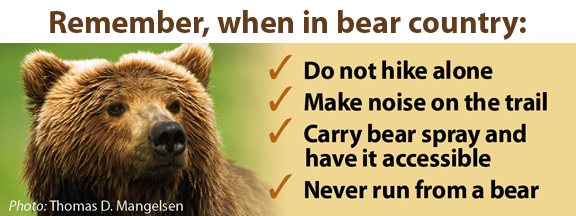
Photo: Gary Kramer, USFWS

Wolves avoid humans, but encounters sometimes occur when humans and wolves use the same habitat. Wolves that approach people, buildings, livestock, or domestic dogs are either habituated to humans, unhealthy, wolf-dog hybrids, or former captive animals. Wolf-dog hybrids can be especially dangerous because they lack the shyness of wild wolves.

Even though wild wolves rarely threaten human safety, they are wild animals that should be respected and never approached.

Report all suspected wolf and wolf track sightings to the Washington Wolf Reporting Hotline at 888-584-9038.

At your home or ranch:

Never let wolves become comfortable around you or your home, or they may lose their fear of people.

  • Never feed wolves or other wildlife.
  • Garbage can attract wolves and other wildlife.  Keep garbage in a secure location.
  • Do not leave any food outside, including scraps, pet food, or livestock feed. When possible, feed animals inside.
  • Keep dogs under supervision. Wolves can be highly territorial toward other canids.
  • Wolves can be scavengers, so bury dead livestock and pets.
  • To prevent livestock depredation, consider the following:
    • At night, use range riders or dogs with cattle and herders or dogs with sheep.
    • Remove sick or injured livestock.
    • Delay cattle turnout until after calves are born and weigh at least 200 pounds and after elk calves/deer fawns are born.
    • Avoid areas near wolf dens and wolf rendezvous sites during spring and summer.
    • Use permanent or portable fencing, including electric fencing.
    • When possible, keep livestock well-fenced and closer to human dwellings,  wolves avoid these areas.

While camping, hiking, and hunting in wolf country:

  • Never feed, approach, or encourage wolves to come near, or they may lose their fear of people.
  • Stay away from fresh wolf kills, dens, and rendezvous sites.
  • Keep a clean and orderly camp. Cook and store food away from sleeping areas. Suspend food, toiletries, garbage and other loose objects on a rope between trees, or in secured kayak hatches, out of reach of wildlife. Wolves have been reported removing personal and other non-food items from campsites.
  • Do not bury garbage. If you pack it in – pack it out!
  • Wash dishes in a container and dispose of grey water.
  • Near the coast use areas below high tide mark, away from camp, in an area of high tidal exchange for toilets – do not use the upland areas, wolves will feed on human excrement.

Wolves and Dogs:

  • The gray wolf is the ancestor of domestic dogs. They are actually the same species, Canus lupus. That is why wolves view dogs as competitors or territorial intruders and have attacked and killed them. Owners of dogs need to be aware of the potential risk to their dogs if they are in wolf habitat, especially when guarding or herding livestock, hunting, accompanying hikers, or running at large.
  • In areas occupied by wolves, homeowners should not allow dogs to roam at large or leave dogs outside overnight unless kept in a sturdy kennel. Dogs should be kept on leash or in visual/auditory range and owners should vocalize frequently, including use of whistles. Dogs should be trained not to chase or approach wildlife and to return on commands. Homeowners should not leave dog food outside and avoid feeding wildlife near their homes.
  • Hikers should consider leaving their dogs at home when visiting sites with wolves. Hikers with dogs should keep them on leash or closely controlled. Hikers should make noise and equip dogs with bells or other noise-makers to alert wolves to the presence of people. If a wolf is encountered, bring dogs to heel and leash them, and stand between them and the wolf; wolves avoid humans and this often ends the encounter. Don’t try to break up a physical fight between a wolf and a dog.
  • Hunters who use dogs in areas where wolves are known to exist (either to find game birds or, where allowed, to find other game animals), should avoid releasing dogs in areas with fresh evidence of wolves (tracks, scat, howling, etc.) Stay in close range of hunting dogs, communicating with them by voice or whistle, and use bells or beeper collars on dogs to alert wolves to the presence of people. Hounds used to tree game should be released only on fresh sign to avoid long chases, and when treeing game, reached as soon as possible so they are not unattended for long.
  • Be alert and aware of the potential risks when recreating or living in wolf country. To prevent problems with wolves and other wildlife, always keep a clean camp or home site to avoid attracting wolves that might scavenge for food, or more likely prey upon other animals that are attracted to both intentional and non-intentional feeding opportunities. (Source: USFWS 2007)

In your community:

  • Remind your neighbors to never feed wolves and other wildlife.
  • Promote the reduction of potential wolf food sources in and around your community.
  • Notify authorities about wolves that seem comfortable around people, seek human food, or frequent human areas. Early intervention can keep a problem from getting worse.

2 accused of illegally killing WA grizzly


MOSES LAKE, Wash. – Two Grant County men are expected to appear in federal court next week, accused of shooting one of Washington state’s few grizzly bears. The case stretches back to a hunting trip in October 2007, during which investigators say the men shot a full grown male grizzly in Northeastern Washington’s Selkirk Mountains.

Kurtis Cox and Brandon Rodeback are then accused of transporting the dead bear to property near their homes in the Moses Lake area. State and federal wildlife investigators say they were able to find the burial site.

“Officers found a grizzly bear carcass and a grizzly bear hide and head in two separate holes buried on the family farm,” said Deputy Chief Mike Cenci, of Washington Fish & Wildlife Enforcement. Investigators were able to determine from tests that the bear was a valuable research subject.

State and federal wildlife officers say a tip led them to the suspects and a site where they tried to hide the bear. They released this photo of the bear’s hide. “It had an ear tag,” Cenci said. “Biologists had been tracking that animal for 14 years, so we know a lot about its life history.”

Wildlife groups say killing any member of the state’s struggling grizzly bear population is a big setback to hopes the large bears will reestablish a presence in Washington state. “It really increases the chance that this animal is not going to make it, and we cannot afford to lose anymore bears in the Cascades or the Selkirks,” said Paul Bannick, Seattle Director of Conservation Northwest.

Once plentiful in Washington and most of the rest of the Western states, the grizzlies were all but hunted into extinction. Efforts to protect them have helped increase numbers in Montana, Idaho and Wyoming. The return of the bears to those states has already generated heated concerns from some ranching and hunting groups.
Those same concerns are now being voiced as Washington state prepares for what appears to be the grizzly’s imminent return to this state. Shooting a grizzly in any state is a violation of federal endangered species laws and could lead to six months in jail and heavy fines.

Cox and Rodeback are expected to appear before a federal magistrate in Spokane next week. KING 5 was unable to contact either man today. Court documents indicate the two men explained to investigators they didn’t realize the bear was a protected grizzly, not a common black bear for which Rodeback had a hunting permit.

Source: GARY CHITTIM / KING 5 News

Grizzly Bear Safety

[toc class=”toc-right”]

Staying Safe in Bear Country

Bear attacks are very rare though many thousands of people live, work and recreate in bear country. Bears are far more likely to enhance your wilderness experience than spoil it.

Visit our Tips for Coexistence page to learn about preventing human conflicts; remember that it is always good to be prepared for an encounter. You should always carry bear spray while recreating in bear country and know how to use it. Watch this excellent video by our  partners at Counter Assault.

https://youtu.be/pc0_GqXKETA

Remember, there is no fool-proof way of dealing with a bear encounter: each bear and encounter is different.  Knowing how to interpret their behavior and how to act responsibly is part of the pleasure of sharing our environment with wild bears.

Bear Body Language

Bears may appear tolerant of people and then attack without warning. A bear’s body language can help you determine its mood. A bear may stand on its hind legs or approach to get a better view, but these actions are not necessarily signs of aggression: the bear may not have identified you as a person and may be unable to smell or hear you from a distance.  In general, bears show agitation by swaying their heads, huffing, popping their jaws, blowing and snorting, or clacking their teeth. Lowered head and laid-back ears also indicate aggression.

Predatory vs. Defensive Bear Attacks

If you see a bear in the distance, respect the bear’s need for space.  Try to make a wide detour or leave the area. If you suddenly surprise a bear at close range, STOP. Don’t crowd the bear – leave it a clear escape route and it will probably exit. Assess the situation: is the bear acting in a calm and curious manner, or is it acting in a predatory or defensive manner?

Defensive Confrontations:

Defensive confrontations are usually the result of a sudden encounter with a bear protecting its space or food cache, and with female bears with young.   Defensive confrontations seldom lead to contact.  In defensive confrontations, the bear is threatening you because it feels threatened.

If you suddenly surprise a bear, remain calm and do not run.

  • Speak in a low monotone voice so the bear can identify you as human.
  • A bear may charge in an attempt to intimidate you – usually stopping well short of contact.
  • If a bear begins to charge, use Bear Spray as instructed under the Bear Spray section of this brochure.
  • If Bear Spray does not deter a Defensive Confrontation, drop to the ground and play dead to allow the spray to take effect. Protect your back by keeping your pack on. Lie on your stomach, clasp your hands behind your neck, and use your elbows and toes to avoid being rolled over. If the bear does roll you over, keep rolling until you land back on your stomach.
  • Remain still and quiet. A defensive bear will stop attacking once it feels the threat has been removed.
  • Do not move until you are absolutely sure the bear has left the area.

Predatory Confrontations:

Predatory attacks by bears are very rare, but do occur.  Any bear that continues to approach, follow, disappear and reappear or displays other stalking behaviors is possibly considering you as prey.  Bears that attack you in your tent or confront you aggressively in your campsite or cooking area should also be considered a predatory threat.

  • If the bear does not respond to aggressive actions such as yelling, throwing rocks and sticks, etc., you should be prepared to physically fight back if it attempts to make contact.
  • Try to be intimidating: look as large as possible.
  • If you have bear spray, emit a deterring blast, preferably before the bear is within twenty-five feet. This gives the animal time to divert its advance.
  • If the bear continue to follow, place your pack or other items down as a distraction.
  • If a grizzly bear following you, climbing a tree may be an option but it is no guarantee of safety.

From Center for Wildlife Information.

Additional Resources for Staying Safe in Bear Country

Reporting

If you have seen a grizzly bear

There are several options if you think you have seen a grizzly bear, but quick reporting is critical – please use whichever option is most convenient. If possible, please contact each of the organizations below.

  • Call the wolf-bear hotline: 1-888-WOLF-BEAR (US Fish and Wildlife Service, Olympia)
  • WA or ID Patrol or Ranger Stations (see links below)

Please be as specific as possible in your message about the location and time of the observation.

  • What exactly did you see (e.g. a single bear, family group, a grizzly bear plant dig, a carcass)?
  • Let us know if you took photographs or measurements.
  • What made you think that it was a grizzly bear or grizzly bear field sign?
  • Remember to give your full name and telephone number.

If you need to report an incident

Report all observations and field sign to your local Washington State Patrol Office, Idaho State Patrol Office, the nearest Washington ranger station or Idaho ranger station.

In case of an emergency, call 911

Visit the Products page to see our Bear Safety brochure.