
Be Part of the Solution this Autumn

The technical term for intense eating is ‘hyperphagia.’ It means to eat and drink as much as possible, almost frantically, throughout the entire day with only short rest periods. Both black and grizzly bears must do this during the late summer, fall and early winter in order to prepare themselves and their cubs for 5 to 7 months of winter denning.

So although your blue jays may be squawking at you for those tasty black sunflower seeds, or you reason that those rotting apples in your orchard could wait a few more days until you pick them up so you can take advantage of the last sunny days to go hiking, or you just can’t get up out of bed in the cold morning to bring out your trash on garbage day, think twice about nearby bears practicing hyperphagia. Now is the most important time to make that extra effort to keep bears out of your neighborhood.

Bear eating berries. Bear Smart Durango

As natural edibles become scarce with the season, bears can be attracted to human sources of food; unsecured garbage, birdseed in feeders, rotting fruit on orchard floors and pet food left outdoors.  Unfortunately, this unnatural interaction between humans and bears can lead to conflict.

Be part of the solution, not part of the problem this autumn. Wait to feed your birds until mid-November. Take out your garbage on the day of pick-up, or store it indoors until you go on a dump run. Pick up rotting fruit in your orchard and trim low hanging branches. And store your barbeque and pet food indoors. You can make all the difference in your community. And pass this important information on to your neighbors too!

For more tips on keeping your yard free of bear attractants, read Tips for Coexistence.  If you’d like to share this important information with your neighbors, print or order our Bear Safe Door Hanger. For more information about how to responsibly feed birds in bear country, read Attract Birds, Not Bears.

New Grizzly Bear Study within Cabinet-Yaak Ecosystem

The Interagency Grizzly Bear Committee approved a DNA hair snare study within the Cabinet-Yaak grizzly bear ecosystem to be conducted over the next few years. This study will parallel a similar study that was conducted within the Northern Continental Divide Ecosystem several years ago. This study will be conducted over the entire Cabinet-Yaak Ecosystem, which lies partially within Idaho and Montana states. The ecosystem will be divided in approximately 395 grids, which are (5km x 5km) in size. A sampling station will be established within each grid. Each sampling grid will include a hair snagging station which is designed to collect hair from bears and other wildlife that are attracted to the grid station. Bears are attracted to the grid station by a scent lure and hair samples are collected by barbed wire without injury to the animals. Teams of scientists then collect the hair samples regularly for analysis. A visual analysis will determine species of bear and further genetic analysis can be used to identify individual bear and sex. The outcome will allow scientists and managers to best determine the number of grizzly bears that are within that ecosystem within a high degree of statistical accuracy and what steps may be needed to further recovery efforts.

For more information:
http://www.cdapress.com/news/outdoors/article_654d9bf8-ea08-5b9b-9341-2c52c31b8f37.html


Tis the Season for Hikers and Hunters to Share the Trails


A tragic thing happened in August of 2008 when black bear hunting season opened at the same time that the alpine meadow flowers were blooming on one of the most popular hiking destinations in Skagit County, Sauk Mountain. A young hunter mistook a hiker for a black bear, leaving her dead.

August is when bear season opens in Western Washington and it is also when a lot of recreationists step outside to enjoy the beauty of the North Cascades. Most of our public land are considered ‘multiple use’, so in addition to being Bear Aware, we need to remember to be aware of our fellow recreationalists.

Hikers, take the time to find out if your destination is in a designated hunting area and if hunting season is open. Wear bright colors and always travel in groups. Hunters, know your hunting areas; is it also a popular hiking area? Utilize the tools from your hunter safety course and always
know your target: when in doubt, don’t shoot.  Be aware of fellow hunters
and hikers in the area and when hunting in grizzly bear country, know the
difference between a black bear (for which you can buy a tag) and a grizzly
bear (which, as an threatened species, is illegal to kill).

Please visit https://westernwildlife.org/grizzlies/bear-identification/ for more
information about how to identify grizzly bear vs. black bear.  Visit
https://westernwildlife.org/grizzlies/tips-for-coexistence/ for more information on
hunting and hiking safely in bear country.

Ecosystems Benefit from Predator Presence

We are entering the middle stages of the 6th mass extinction event of the world.

That line certainly grabbed my attention when I read “Trophic Downgrading of Planet Earth” by James Estes, et al.  While mass extinctions are a natural phenomenon and are expected to continue, the upcoming 6th is considered different from previous events; scientists believe that 1) humans will be responsible for the next world-wide extinction, and 2) the next extinction will be characterized by the loss of apex consumers (those at the top of the food chain).  Why is this of particular interest to carnivore biologists?  The loss of important apex consumers results in trophic downgrading.  The theory of trophic downgrading suggests that predators ultimately control the health of their ecosystem: remove them, and a habitat’s flora and fauna will eventually fall out of balance and swing wildly from one extreme to the other, often resulting in ecosystem damage.

The downgrading process rests on the premise of another ecological phenomenon called trophic cascading.  Cascades are triggered by adding or removing predators from an ecosystem and result in changes to the predator/prey relationships within the food web.  The cascade process has been shown in every biome of the world, including highly managed ecosystems like Yellowstone National Park.  Studies have shown that the absence and presence of wolves in Yellowstone have had direct effects on the park’s plant and animal processes.  During 70 years of wolf absence from Yellowstone National park, a number of deciduous tree species quickly died out, which had a direct effect on soils, beaver and other ecosystem conditions.  Without wolves present to maintain their numbers, ungulates essentially overgrazed their environment.  Once wolves were reintroduced, ecosystem slowly found rebalance and changed ungulate feeding habits, decline in elk and coyote numbers, and an increase in beaver populations.

While very aware of the challenges ahead and the seemingly desperate state of parts of our biospheres, I am encouraged when I hear about increases in carnivore populations in some western states, like Washington’s recent wolf pack increases and recent Northern Cascade grizzly bear sighting.  Perhaps with a little assistance from their human neighbors, these and other important apex consumers can begin to refill their ecosystem niche.  If we can begin to accept predators’ necessary role in our ecosystem, we can then be more mindful of responsible and safe co-habitation with the animals upon which, we’re beginning to realize, we and our world greatly depend.

Read more on the Grizzly Bear Outreach Project’s website about how trophic downgrading influences human-caused impacts on nature such as climate change, habitat loss and more.  Watch a fun remote camera video showing how many different species (including humans!) utilize one piece of land over the course of one year – a great example of the basis for trophic cascading.

Fifth Washington Wolf Pack Confirmed


Washington Department of Fish and Wildlife Press Release:


July 22, 2011
Contact: Harriet Allen, (360) 902-2694

State’s fifth wolf pack confirmed in Stevens County


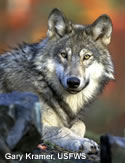
wolf imageOLYMPIA—Washington’s fifth gray wolf pack has been confirmed in northeast Stevens County.

Earlier this month, Washington Department of Fish and Wildlife (WDFW) biologists caught, marked with an ear tag and released a 2-month-old wolf pup from the pack. Biologists have since been trying to capture one of the pack’s breeding adult wolves to radio-collar it for monitoring. The effort to document the pack began after local ranchers reported observing three wolf pups and hearing howling in late June.

The pack is believed to include a breeding-age male and female and at least three pups. The group has been named the Smackout Pack, in reference to geographic features in the area.

The Lookout Pack, confirmed in Okanogan and Chelan counties in 2008, was Washington’s first documented resident gray wolf pack since a breeding population of wolves was extirpated from the state in the 1930s. Two more packs have been documented in Pend Oreille County—the Diamond Pack was confirmed in 2009, and the Salmo Pack was confirmed in 2010.

Last month, the state’s fourth documented pack—dubbed the Teanaway Pack— was confirmed in Kittitas County. DNA analysis of that pack’s adult female wolf indicated she is likely a recent descendant of the Lookout Pack.

The gray wolf (Canis lupus) is protected throughout Washington as a state endangered species. In the western two-thirds of Washington, the species is also federally protected under the Endangered Species Act (ESA). It is illegal to harm or harass a federal- or state-protected endangered species.

WDFW has been working since 2007 to develop a wolf conservation and management plan in anticipation of wolves re-entering Washington from other states or Canada.

A Final EIS/recommended plan—which was developed with a 17-member citizen group and included extensive public review and scientific peer review—will be presented to the Washington Fish and Wildlife Commission in a special public meeting Aug. 4 in Olympia. Additional public workshops on the proposed plan are scheduled later this summer and in the fall.

“Wolves are re-establishing here on their own,” said Nate Pamplin, who heads WDFW’s Wildlife Program. “The confirmation of additional breeding wolf packs moves us closer to achieving a sustainable population, and also highlights the need to finalize a state wolf plan that sets recovery targets and management tools to address livestock and ungulate conflicts.”

More information on the draft plan and all Washington wolf packs.

Wolf sightings or activity should be reported through the joint federal-state toll-free wolf reporting hotline at 1(888) 584-9038. Joint federal-state Wolf Response Guidelines, including agency staff contact information, are available at here.