Ecosystems Benefit from Predator Presence

We are entering the middle stages of the 6th mass extinction event of the world.

That line certainly grabbed my attention when I read “Trophic Downgrading of Planet Earth” by James Estes, et al.  While mass extinctions are a natural phenomenon and are expected to continue, the upcoming 6th is considered different from previous events; scientists believe that 1) humans will be responsible for the next world-wide extinction, and 2) the next extinction will be characterized by the loss of apex consumers (those at the top of the food chain).  Why is this of particular interest to carnivore biologists?  The loss of important apex consumers results in trophic downgrading.  The theory of trophic downgrading suggests that predators ultimately control the health of their ecosystem: remove them, and a habitat’s flora and fauna will eventually fall out of balance and swing wildly from one extreme to the other, often resulting in ecosystem damage.

The downgrading process rests on the premise of another ecological phenomenon called trophic cascading.  Cascades are triggered by adding or removing predators from an ecosystem and result in changes to the predator/prey relationships within the food web.  The cascade process has been shown in every biome of the world, including highly managed ecosystems like Yellowstone National Park.  Studies have shown that the absence and presence of wolves in Yellowstone have had direct effects on the park’s plant and animal processes.  During 70 years of wolf absence from Yellowstone National park, a number of deciduous tree species quickly died out, which had a direct effect on soils, beaver and other ecosystem conditions.  Without wolves present to maintain their numbers, ungulates essentially overgrazed their environment.  Once wolves were reintroduced, ecosystem slowly found rebalance and changed ungulate feeding habits, decline in elk and coyote numbers, and an increase in beaver populations.

While very aware of the challenges ahead and the seemingly desperate state of parts of our biospheres, I am encouraged when I hear about increases in carnivore populations in some western states, like Washington’s recent wolf pack increases and recent Northern Cascade grizzly bear sighting.  Perhaps with a little assistance from their human neighbors, these and other important apex consumers can begin to refill their ecosystem niche.  If we can begin to accept predators’ necessary role in our ecosystem, we can then be more mindful of responsible and safe co-habitation with the animals upon which, we’re beginning to realize, we and our world greatly depend.

Read more on the Grizzly Bear Outreach Project’s website about how trophic downgrading influences human-caused impacts on nature such as climate change, habitat loss and more.  Watch a fun remote camera video showing how many different species (including humans!) utilize one piece of land over the course of one year – a great example of the basis for trophic cascading.

Fifth Washington Wolf Pack Confirmed


Washington Department of Fish and Wildlife Press Release:


July 22, 2011
Contact: Harriet Allen, (360) 902-2694

State’s fifth wolf pack confirmed in Stevens County


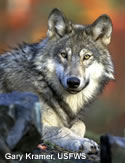
wolf imageOLYMPIA—Washington’s fifth gray wolf pack has been confirmed in northeast Stevens County.

Earlier this month, Washington Department of Fish and Wildlife (WDFW) biologists caught, marked with an ear tag and released a 2-month-old wolf pup from the pack. Biologists have since been trying to capture one of the pack’s breeding adult wolves to radio-collar it for monitoring. The effort to document the pack began after local ranchers reported observing three wolf pups and hearing howling in late June.

The pack is believed to include a breeding-age male and female and at least three pups. The group has been named the Smackout Pack, in reference to geographic features in the area.

The Lookout Pack, confirmed in Okanogan and Chelan counties in 2008, was Washington’s first documented resident gray wolf pack since a breeding population of wolves was extirpated from the state in the 1930s. Two more packs have been documented in Pend Oreille County—the Diamond Pack was confirmed in 2009, and the Salmo Pack was confirmed in 2010.

Last month, the state’s fourth documented pack—dubbed the Teanaway Pack— was confirmed in Kittitas County. DNA analysis of that pack’s adult female wolf indicated she is likely a recent descendant of the Lookout Pack.

The gray wolf (Canis lupus) is protected throughout Washington as a state endangered species. In the western two-thirds of Washington, the species is also federally protected under the Endangered Species Act (ESA). It is illegal to harm or harass a federal- or state-protected endangered species.

WDFW has been working since 2007 to develop a wolf conservation and management plan in anticipation of wolves re-entering Washington from other states or Canada.

A Final EIS/recommended plan—which was developed with a 17-member citizen group and included extensive public review and scientific peer review—will be presented to the Washington Fish and Wildlife Commission in a special public meeting Aug. 4 in Olympia. Additional public workshops on the proposed plan are scheduled later this summer and in the fall.

“Wolves are re-establishing here on their own,” said Nate Pamplin, who heads WDFW’s Wildlife Program. “The confirmation of additional breeding wolf packs moves us closer to achieving a sustainable population, and also highlights the need to finalize a state wolf plan that sets recovery targets and management tools to address livestock and ungulate conflicts.”

More information on the draft plan and all Washington wolf packs.

Wolf sightings or activity should be reported through the joint federal-state toll-free wolf reporting hotline at 1(888) 584-9038. Joint federal-state Wolf Response Guidelines, including agency staff contact information, are available at here.

Fourth Washington Wolf Pack Confirmed

Washington Department of Fish and Wildlife confirmed last week that a new pack of gray wolves are living near Teanaway River north of Cle Elum, about 90 miles east of Seattle.  The Teanaway Pack is the first pack to return to Kittitas County since wolves were exterminated over 50 years ago.

DNA tests confirmed that a trapped wolf near the Teanaway River is a lactating female, indicating she recently gave birth. Additional DNA test will help explain where the wolves came from (British Columbia or the Rocky Mountains), but the number of wolves in the Teanaway pack is still unknown.

Regardless of where the Washington wolves originated, they re-established themselves; they were not reintroduced by federal agencies as they were in Idaho, Montana and Wyoming.  It will be interesting to see if this fact makes a difference in local perceptions of wolves and their management in Washington, relative to other western states.

The Teanaway confirmation has occurred as Washington State finalizes its wolf management plan.  Currently, wolves in the western 1/3 of the state remain on the Federal Endangered Species List, while the western 2/3 remain on the State Endangered Species List.

See a map of current Washington wolf pack locations.

White family charged with killing up to five gray wolves

Bill and Tom White are alleged to have killed a total of five endangered gray wolves on or near their Twisp, Washington property in the area that the Lookout Pack had established residence.

One of the wolves shot by the Whites in 2008 was skinned and the hide attempted to be smuggled to Canada for processing. The package was intercepted when it started leaking blood at the FedEx office in Omak. This incident kicked off the federal investigation into the Whites, whose homes were searched by state and federal agents.

The U.S. District Court in Spokane indicted Bill White, his son Tom White and Tom’s wife, Erin White with conspiracy to take an endangered species, punishable by up to one year in prison and up to $100,000 in fines, and smuggling a wolf hide out of the country, punishable by up to 10 years in prison and fines.

The Lookout Pack is the first pack of gray wolves confirmed in Washington in more than 70 years. In July 2008 there were as many as nine animals in eastern Washington, but state wildlife officials fear that because of poachers as few as two animals have survived.

Read more about the killing of gray wolves in Methow Valley.

To learn more about gray wolves visit GBOP’s website

Grizzlies run amok at zoo’s Bear Affair and Big Howl for wolves

Come out to Woodland Park Zoo on Saturday June 4th to watch Keema and Denali, 900 pound grizzly bears, run amok a mock campsite and backyard as Chris Morgan, bear ecologist, narrates how intelligent, adaptive and important these awe-inspiring bears are to a healthy ecosystem.

The Bear Affair & Big Howl for Wolves is a full day of activities focused on bears and wolves and how humans can co-exist with them.

The schedule:

  • 9:30 a.m. – 3 p.m. Crafts for kids
  • 10 a.m. Keeper talk on wolves
  • 10:30 a.m. Keeper talk on sloth bears
  • 11 a.m. Mock campsite in grizzly exhibit with Chris Morgan
  • Noon – 1 p.m. Chris Morgan book signing
  • 1:30 p.m. Keeper talk on Malayan sun bears
  • 2 p.m. Home demonstration in grizzly exhibit with Chris Morgan
  • 3 p.m. Keeper talk on wolves


http://greenlake.komonews.com/news/urban-wildlife/see-grizzlies-run-amok-zoos-bear-affair-big-howl-wolves/643809