
8th Wolf Pack Confirmed in Washington State

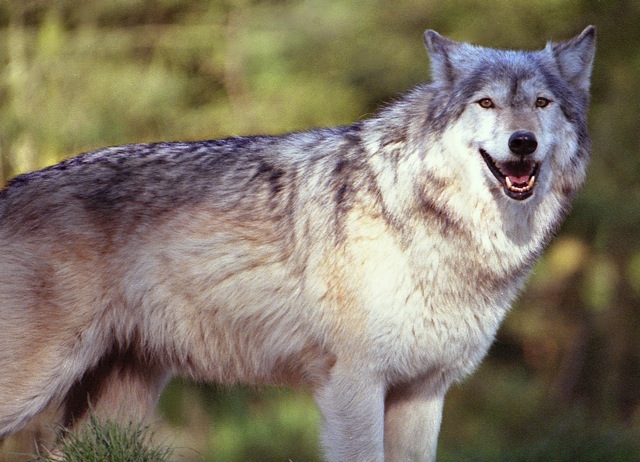
Many of Washington’s residents are thrilled to see that our native gray wolf population is showing signs of recovering and expanding their range. For the most part, it has been a peaceful return and the wolves are finding natural prey and keeping away from humans. But what should we do when ranchers in remote areas find predation has occurred on their animals as was reported to occur at a ranch in “The Wedge,”  an area of recent wolf activity in Stevens County near the Canadian border between the Columbia and Kettle Rivers, the same area occupied by Washington’s newest wolf pack?  Even though wolf recovery is very popular with a majority of Washington residents, Washington Department of Fish and Wildlife has a fine line to walk in implementing the State’s new Wolf Conservation and Management Plan adopted by the State’s Fish and Wildlife Commission and the Department last December. Local staff from the Grizzly Bear Outreach Project who live and work in the ranching communities will be listening to concerns voiced by the community and cooperating in efforts to find enduring solutions.  The story below from the Seattle Times discusses Washington’s newest wolf pack–one they will be monitoring now that they have collared an adult male. Department personnel hope that non-lethal means can be employed to harass any wolves approaching livestock.  However,  one Stevens County rancher has been issued a kill permit if he sees a wolf approaching or harming his cattle.  For more information on the Wolf Conservation and Management Plan, please visit http://wdfw.wa.gov/conservation/gray_wolf/ or our own information at  https://westernwildlife.org/gray_wolf/gray-wolf-canis-lupus/
SPOKANE, Wash. —
Wash. wildlife officials: 8th wolf pack confirmed
seattletimes.nwsource.com
Washington Fish and Wildlife officials say they’ve confirmed an eighth wolf pack in the state.  An adult wolf believed to be the pack’s alpha male and a pup were caught Monday in northwestern Stevens County near the Canadian border. The adult got a monitoring collar and the pup got an ear tag.

Wildlife officials say this is being called the “Wedge” pack, named for the wedge-shaped part of Stevens County between the Kettle River and the Columbia River.

Just last month, officials said the agency had confirmed a seventh Washington wolf pack, this one in southern Stevens County, north of the Spokane Indian Reservation. They’re calling that one the Huckleberry pack.

Busy interstate highway through critical habitat: wildlife crossings and monitoring

Have you ever traveled by car in the Pacific Northwest? Interstate-90 intersects the rugged Cascade Mountains in Washington State’s Snoqualmie Pass region, which has been identified as a critical link in the north-south movement of wildlife. I-90 Wildlife Watch is a citizen-based wildlife monitoring project that invites motorists to report wildlife sightings along I-90 in the Snoqualmie Pass region of Washington, and to bring awareness to the region. According to the Washington State Department of Transportation, “Wildlife habitat on either side of I-90 will be reconnected with the installation of new bridges and culverts, protecting both animals and the traveling public.” I-90 Wildlife Watch is gathering this information to help inform highway planning. 

Read more: I-90 Wildlife Watch and  Washington State Department of Transportation

I-90 Wildlife Watch poster.

Cougar-Smart Efforts in British Columbia

The town of Squamish in British Columbia, our neighbor to the north, has the highest number of conflicts between humans and cougars of any town in British Columbia. That doesn’t mean that people are threatened by cougars. It means that cougars are reported coming too close to where people live and recreate or where they keep their livestock and pets. Squamish already has a very active Bear Aware Program, which they are now expanding to included cougars and other wildlife.

On Friday, June 22, Meg Toom wrote in the The Chief, the Squamish home-town newspaper, “Those statistics highlight the importance of expanding our awareness to include additional wildlife such as cougars. By reducing the availability of attractants for cougars, we can create a safer community for both humans and wildlife.”

“If we leave attractants (i.e. pet food or bird seed) accessible outdoors, we could be attracting small rodents to feed, which attract small domestic pets which, in turn, attract larger predators like coyotes and cougars. We all need to think of the food chain that we create within our own backyards.”

The Grizzly Bear Outreach Project endorses these steps for reducing human/cougar conflicts. Cougars are present throughout many parts of Washington State where conflicts with cougars occur most often in areas where subdivisions have been spreading out into former prime cougar habitat. GBOP has also expanded educational outreach efforts to include information on cougar awareness and tips for co-existing with cougars. Click here to go to our Cougar Page
for more information on the adaptable and secretive cougar.

Cougar Story with a Happy Ending

Cougars are an important part of our natural heritage. Sleek and graceful, cougars are solitary and secretive animals rarely seen in the wild. With neighborhoods encroaching into wildlife habitat, the number of cougar sightings may increase, but a cougar sighting does not mean that there are more in an area. The cougar’s ability to travel long distances occasionally brings these cats into seemingly inappropriate areas, even places densely settled by humans. Such appearances are almost always brief, with the animal moving along quickly in its search of a suitable permanent home.

Photo: Mark Mulligan / The Herald

The young cougar in this news article was safely trapped and removed from such a place. “She could be at an age where she’s learning to hunt on her own. Her mother likely ran her off to encourage her to establish her own territory.” Such inexperience gets some cougars into trouble, but in this case good practices in non-lethal wildlife control techniques by state wildlife agents may help assure that this cougar will have no interest in anything human. Karelian Bear Dogs, which work to deter and repel bears, are being used to conduct similar work with cougars. Read the article, look at the photo gallery, and find that even an officer many years in the field can still be deeply moved to appreciate a magnificent young cougar.

Click the link to read the HeraldNet news article:


Cougar prowling Arlington caught, released in wild

$10,000 Reward Offered for Grizzly Bear Shootings in Northern Idaho.

NEWS RELEASE
US FISH AND WILDLIFE SERVICE
PACIFIC REGIONAL OFFICE

Contact: Jason Holm, 503-231-2264   Jason_holm@fws.gov
Contact Phil Cooper, 208-769-1414      Phil.Cooper@idfg.idaho.gov

$10,000 Reward Offered for Grizzly Bear Shootings in Northern Idaho.

Investigation continues in shooting of grizzly and her nursing cub.

U.S. Fish and Wildlife Service (USFWS) law enforcement agents and the Idaho Department of Fish and Game (IDFG) are investigating the fatal shooting of a federally protected grizzly bear and her nursing cub in northern Idaho. A reward of $10,000 is being offered for information leading to the identification, arrest and conviction of the person or persons responsible.  

The dead adult grizzly was discovered on the morning of May 18 by a hiker from Bonners Ferry, Idaho.  It was located in a clear-cut in Boundary County on Hall Mountain.  Hall Mountain is located east of the Kootenai River valley and northwest of US Highway 95.

The adult bear was a large female that was lactating, an indication she was nursing a cub (or cubs) produced during her recent winter hibernation. A subsequent search of the surrounding area by an Idaho Fish and Game Biologist turned up a dead cub that had also been shot.  Both bears appeared to have been dead a few days when found on May 18.

Both carcasses are being flown to the US Fish and Wildlife Service lab in Ashland Oregon for necropsy and further retrieval of evidence.

A black bear season is currently open in Idaho; however, hunters may not shoot grizzly bears and may not shoot black bears with cubs.  A bear identification program to train hunters to differentiate the species was posted last year and is available on the IDFG web page. 

Grizzly bears are classified as a threatened species in the lower 48 states and are protected by the Endangered Species Act (ESA) of 1973. Killing a threatened species protected by the ESA carries a maximum penalty of one year in prison and a $100,000 fine.

Anyone with information about this incident should contact the U.S. Fish and Wildlife Service Special Agent in Spokane, Washington, at 509-928-6050; the Idaho Department of Fish and Game at 208-769-1414; or the Idaho Citizens Against Poaching Program at 1-800-632-5999. Callers can remain anonymous.  

No additional information is being released at this time pending further investigation.